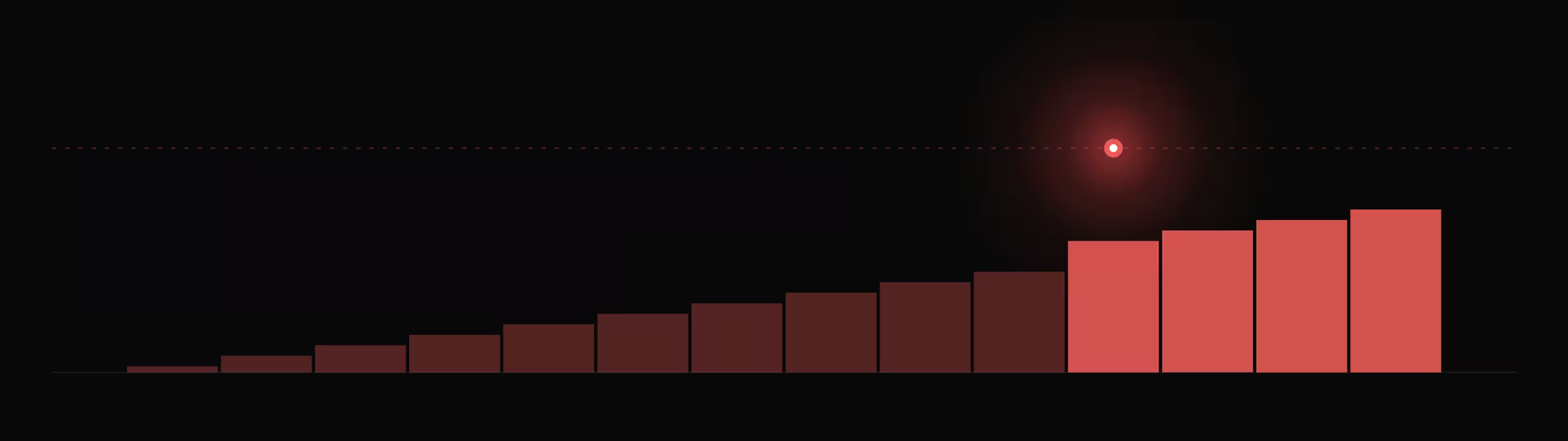

Scope creep rarely shows up as one dramatic moment where everyone suddenly realizes what's happening. It shows up as a hundred reasonable-sounding small requests, each one perfectly easy to justify entirely on its own, that quietly add up over a few months to a project doing meaningfully more than it was ever staffed or priced for.
Many clients work with what's called a pod, a small, fixed team of developers and QA assigned to them rather than an open-ended headcount. A pod only has so much capacity in a sprint, that's the entire point of the model, which means scope creep here isn't abstract. It shows up as the same developers quietly working longer hours, or the same two sprints in a row where the "quick asks" crowd out the roadmap item everyone agreed mattered most. The hard part isn't spotting it. Most account managers see it happening in real time, if they're honest with themselves. The hard part is saying something before it becomes a budget conversation, because every individual ask, taken by itself, feels far too small to make a fuss over. Nobody wants to be the person who nitpicks a five-minute favor.
Name It as a Pattern
One thing makes this conversation meaningfully easier: naming it as a pattern, out loud, rather than treating it as a complaint about any single request.
Instead of "this particular ask is out of scope," which puts the client on the defensive about one specific thing they probably didn't think twice about, try something closer to: "Worth flagging that there have been six requests like this over the past month. Each one made total sense on its own, and together they've moved us meaningfully past what we originally scoped. Let's talk about how to handle that going forward, together." That framing does two things a one-off pushback never quite manages. It shows the client the whole picture is being watched over time, not just nitpicking a single Tuesday afternoon favor. And it turns the moment into a shared problem to solve, rather than a confrontation where one side is right and the other is wrong.
Why the Flag Beats the Surprise
Clients respect the flag far more than they resent it, almost every time. What actually damages trust isn't the conversation itself. It's finding out three months later, buried in an invoice or a budget review, that nobody said anything sooner, and now the number is too big to ignore.
The Standish Group has tracked software project outcomes for decades in its long-running CHAOS research, and scope-related changes show up again and again as one of the most persistent factors separating projects that stay healthy from ones that quietly don't.¹ None of that research is about pods specifically. All of it is about what happens when nobody names the pattern out loud until it's too late.
¹ The Standish Group International, CHAOS Report (ongoing research series on software project outcomes).